A shattered window changes the feel of a home or business immediately. Beyond the mess, it can leave your property exposed to weather, theft, pests, and injury. Knowing how to secure shattered windows in the first few hours helps you protect people and property while you arrange a proper repair.
The priority is not making the opening look perfect. It is creating a safe temporary barrier without worsening the damage, then having the glass and frame assessed by a qualified local professional.
Start by Protecting People From Broken Glass
Keep children, pets, customers, and employees away from the damaged area. Broken glass can travel farther than expected, particularly after a door panel or large window breaks. Put on closed-toe shoes, heavy work gloves, long sleeves, and eye protection before approaching the opening.
Do not press on glass that remains in the frame. A pane may look stable but can release suddenly when the frame shifts. If large pieces are hanging loosely or the window is above ground level, it is safer to leave removal to a glass professional. Avoid using a household vacuum on larger shards, since sharp pieces can damage the machine and create a later hazard.
For glass on the floor, carefully pick up large pieces with gloved hands and place them in a sturdy cardboard box or rigid container. Sweep smaller pieces into a dustpan, then use damp paper towels to collect fine fragments. Check nearby rugs, furniture, window tracks, and the exterior ground before allowing anyone back into the area.
If the damage resulted from a break-in, do not clean or touch more than necessary until law enforcement has documented the scene. Take clear photos from inside and outside for your insurance claim, keeping a safe distance from exposed glass.
How to Secure Shattered Windows Until Repair
Once the area is safe, cover the opening to limit access and keep out wind and moisture. The right temporary material depends on the size and location of the opening, as well as weather conditions.
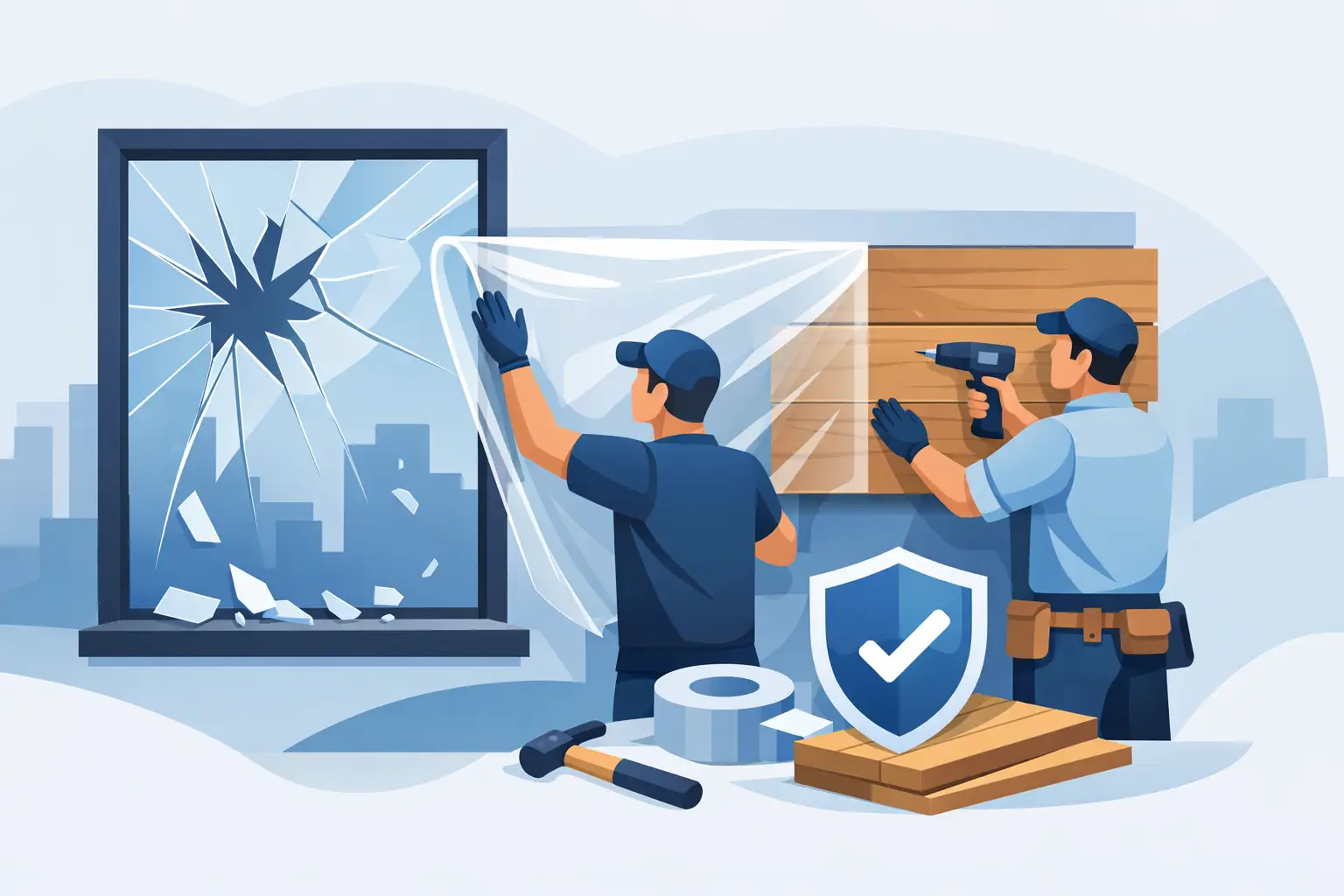
For a small opening in a residential window, heavy-duty plastic sheeting may work for a short period. Cut the material larger than the opening so it overlaps the intact frame, then secure it with strong tape on the interior side where possible. Plastic is useful for blocking drafts and light rain, but it is not a security solution. It can tear in coastal wind and should not be treated as a substitute for glass replacement.
For a larger opening or a ground-floor window, use exterior-grade plywood instead. Measure the opening and cut the panel so it covers the window frame with several inches of overlap on every side. Fasten it into solid framing rather than into thin trim or the remaining glass channel. If you are not certain where the framing is, do not force screws into the wall. Improper fastening can damage siding, stucco, or the window structure and make the final repair more difficult.
A storefront window, sliding glass door, or large picture window typically needs more than plastic and tape. These openings affect security, weather protection, and sometimes business operations. Professional emergency board-up is the safer choice, especially if the frame is bent, the glass is tempered, or broken pieces remain in place.
Avoid These Temporary Fixes
Cardboard, trash bags, and lightweight drop cloths may block a view, but they do little against wind, rain, or unauthorized entry. Do not apply tape directly across cracked or shattered glass in an effort to hold it together. Tape can pull unstable pieces during removal and does not restore the pane’s strength.
It is also wise to avoid boarding up a window that serves as a required emergency exit without first confirming another safe exit is available. In a commercial space, building and fire safety requirements may affect how an opening can be temporarily secured.
Protect the Opening From Weather and Intrusion
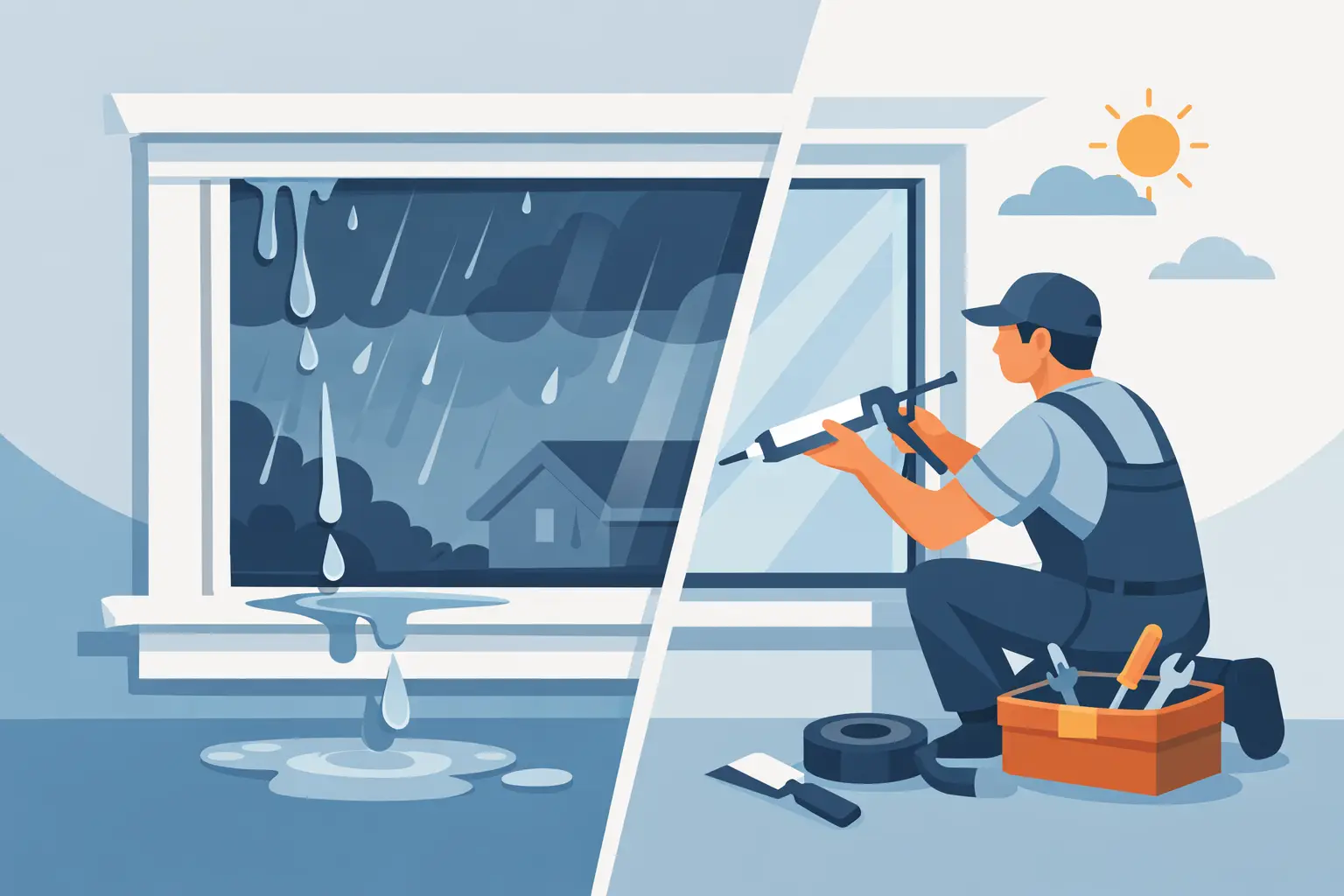
Santa Barbara’s coastal climate is generally mild, but wind-driven rain and overnight moisture can still enter a damaged opening. Move electronics, upholstered furniture, inventory, and artwork away from the window. Place towels along the interior sill if rain is expected, but do not rely on them to stop significant water intrusion.
If the window is accessible from outside, check that the temporary cover is secure from the exterior as well as the interior. A loose plywood panel can become a hazard in strong wind. For homes, turn on exterior lighting near the opening and keep gates or side access points locked. For businesses, document the damage, notify the property manager if applicable, and verify that security cameras are still covering the area.
Do not leave an open or damaged window unattended overnight if it can be avoided. A temporary board-up is designed to reduce immediate risk, not to provide the insulation, appearance, or long-term security of professionally installed glass.
Look Closely at the Frame and Window Type
The visible broken pane is not always the full extent of the damage. A hard impact can bend aluminum frames, crack vinyl frames, damage glazing channels, loosen locks, or affect the seals around insulated glass units. When only one pane of a dual-pane window breaks, the window may still appear closed, but its energy efficiency and moisture resistance can be compromised.
Tempered glass breaks into many small, pebble-like pieces, which is common in patio doors, bathroom glass, and certain safety-rated windows. Annealed glass generally breaks into larger sharp shards. Laminated glass may remain in the opening with a spiderweb pattern because an interlayer holds the pieces together. Each type requires a different removal and replacement approach.
A professional assessment can determine whether a glass-only repair is practical or whether the sash, frame, hardware, or entire window should be replaced. This matters for older windows and windows that already had fogging, drafts, difficult operation, or visible frame wear before the break.
Choose the Right Permanent Repair
Replacing the glass can be a cost-effective option when the frame is sound and the window is otherwise in good condition. It can also be an opportunity to improve safety or performance by selecting glass that better fits the location.
For example, a window near a walkway, door, shower, or patio may need safety glass. A sunny exposure may benefit from insulated or low-emissivity glass that helps reduce heat transfer and glare. Coastal properties may also benefit from premium materials and carefully sealed installation that stands up to moisture, salt air, and changing temperatures.
Full window replacement may make more sense when the frame is warped, deteriorated, difficult to operate, or no longer sealing properly. While replacement costs more upfront than a single-pane repair, it can improve comfort, security, curb appeal, and energy efficiency across the life of the window. The best option depends on the window’s condition, the cause of damage, and your plans for the property.
When to Call for Professional Help Right Away
Some broken windows should be treated as urgent. Call a qualified glass company promptly if the opening is large, the glass is still unstable, the break affects a door, the building cannot be secured, or rain is expected. The same applies when a commercial storefront is exposed or a damaged window creates a safety issue for tenants, customers, or neighbors.
For homeowners, property managers, and business owners throughout Santa Barbara and nearby coastal communities, fast local service can limit the disruption. A skilled glass technician can remove remaining glass safely, secure the opening, take accurate measurements, and recommend a repair or replacement that matches the existing window and the needs of the property.
Resilience Glass provides dependable local support for broken window repair, replacement glass, and precise installation. A same-day estimate can give you a clear path forward after the immediate danger is under control.
A shattered window is stressful, but it does not have to become a larger property problem. Secure the area, use a temporary cover that matches the risk, and arrange a professional repair before weather, moisture, or security concerns have time to compound the damage.