
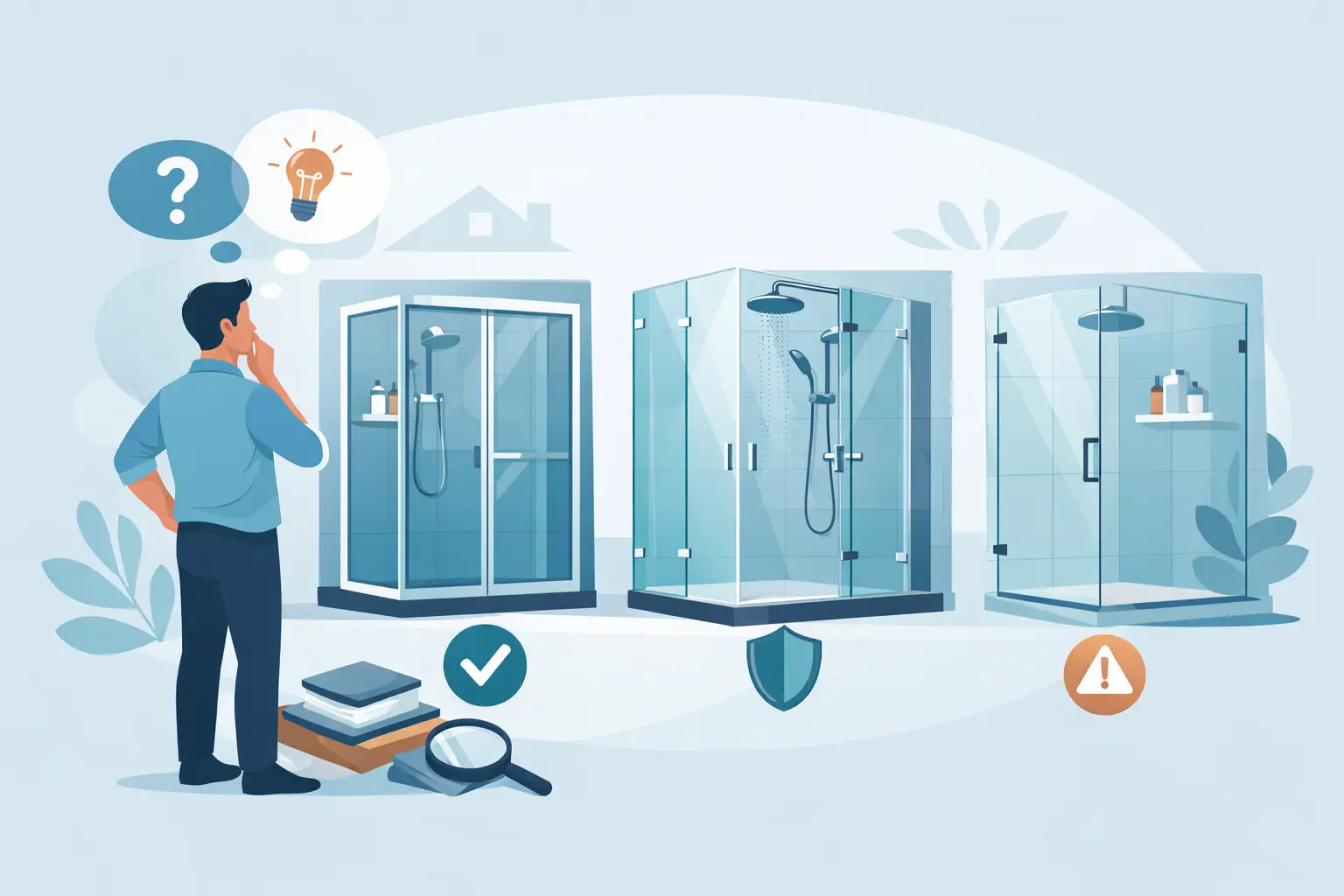
A new shower enclosure can make a dated bathroom feel brighter, larger, and more finished. But knowing how to choose shower enclosures is about more than selecting a style you like in a showroom. The right enclosure needs to fit your bathroom layout, daily routine, cleaning preferences, and the quality level you expect from a long-term home improvement.
For homeowners in Santa Barbara and nearby coastal communities, materials and installation matter even more. Humidity, hard water, and salty coastal air can be tough on poorly made hardware and unfinished edges. A carefully measured, professionally installed glass enclosure gives you a clean look and dependable performance for years.
Start With Your Bathroom Layout
The first decision is not glass color or handle style. It is determining what your bathroom can comfortably accommodate. Measure the shower opening, the depth of the shower floor, ceiling height, nearby walls, and the clearance needed for doors, drawers, toilets, and vanities.
A swinging door needs room to open without hitting another fixture. If the bathroom is compact, a sliding or bypass door may preserve valuable floor space. A fixed-panel design can also work beautifully in a larger walk-in shower, especially when the layout allows an open entry without sending water across the room.
Think about how people actually use the space. A wide opening may be convenient for a household that wants easier access, while an enclosure with more complete coverage may be preferable if you want to keep warmth and water contained. For a rental property or guest bath, straightforward operation and easy maintenance are often more important than highly customized features.
Common enclosure configurations
Frameless, semi-frameless, framed, sliding, pivot, and fixed-panel enclosures can all be good choices. The best option depends on the shower opening and your priorities.
A frameless enclosure uses thick tempered safety glass with minimal metal, creating an open, custom appearance. It is especially effective when you want to show off tile or natural stone. Semi-frameless designs retain much of that clean look while using some framing for support and value. Framed enclosures are often a practical choice for budget-conscious updates and can offer excellent water control when properly installed.
Sliding doors are well suited to tub-and-shower combinations and tight bathrooms because they do not require swing clearance. Pivot doors offer a wider, more substantial entrance but require careful planning for their arc. Fixed glass panels are popular in modern walk-in showers, though they work best when the shower is deep enough and the plumbing is positioned to reduce splash.
Choose the Right Glass Thickness and Type
Shower glass must be tempered safety glass. Tempering strengthens the panel and causes it to break into small, less hazardous pieces if a failure occurs. A reputable glass professional will help verify that the glass thickness and support system match the size and design of your enclosure.
For frameless shower doors, thicker glass is typically used to provide the rigidity that a frame would otherwise supply. This creates the substantial feel homeowners expect from a premium enclosure, but it also adds weight. That means hinges, wall anchors, and structural backing must all be selected and installed with precision.
Clear glass is the most common choice because it makes a bathroom feel open and lets tilework stand out. Low-iron glass is worth considering when color accuracy matters, particularly with white marble, pale tile, or light, carefully selected finishes. Standard clear glass can have a subtle green tint along its edges, while low-iron glass reduces that tint.
Patterned, frosted, or tinted glass provides more privacy, but it can also make a small bathroom feel more enclosed. If privacy is the primary concern, consider the sight lines from the bathroom door and nearby windows before choosing an obscured finish. Sometimes a partial frosted treatment offers a better balance than fully opaque glass.
Do not overlook protective glass treatments
A factory-applied or professional protective coating can make cleaning easier by helping water and mineral deposits release from the surface. It does not eliminate maintenance, especially in areas with hard water, but it can reduce buildup and preserve the clarity of the glass.
The daily habit still matters most. A quick squeegee after showering and a soft cloth around hardware can prevent stubborn spots. Avoid harsh abrasives that may damage protective coatings, metal finishes, or sealant.
Select Hardware Built for Daily Use
Hardware is where a shower enclosure proves its quality over time. Hinges, handles, rollers, clips, channels, and seals should feel solid and operate smoothly. Lower-priced hardware can look acceptable on day one but may loosen, corrode, or become difficult to adjust after repeated use.
Choose a finish that coordinates with faucets, lighting, and cabinet hardware, but do not make appearance the only deciding factor. Polished chrome remains versatile and easy to match. Brushed nickel offers a softer look and can hide water spots better than highly reflective finishes. Matte black creates contrast in contemporary bathrooms, although it may show mineral residue depending on local water conditions.
Coastal homes should pay particular attention to corrosion resistance. Premium hardware and appropriate finishes are a worthwhile investment when moisture and salt air are part of the environment. Ask your installer what maintenance is recommended for the specific finish you select.
Plan for Water Control, Not Just Appearance
Even the most beautiful shower enclosure will disappoint if water escapes through gaps or collects where it should not. Proper water control comes from the entire shower design: the slope of the shower floor, drain location, curb height, door swing, panel placement, seals, and overlap between moving parts.
Frameless glass is not intended to be completely airtight or watertight. Small gaps are necessary for door movement and clean lines. A skilled installer manages these tolerances with precise measurements, strategically placed seals, and the right door configuration. If your existing shower floor has a very shallow curb or questionable drainage, address that before finalizing a glass design.
Open walk-in layouts also require an honest conversation about splash. They can look exceptional, but a fixed panel that is too short or positioned too far from the showerhead may leave the bathroom floor wet. In some cases, adding a return panel or choosing a door provides a more practical result without sacrificing the look you want.
Decide Between Standard and Custom Glass
A standard-sized enclosure may be a sensible solution for a straightforward tub opening or newly built shower with common dimensions. It can be cost-effective and quick to source. However, standard units may require compromises in door placement, glass coverage, or finish options.
Custom shower glass is often the better choice for remodeled bathrooms, out-of-square walls, unusual tile layouts, knee walls, angled ceilings, or large walk-in showers. A custom measurement allows the enclosure to follow the real conditions of the room rather than forcing the room to fit a prefabricated product.
This is particularly valuable in older homes, where walls are not always perfectly plumb. Professional measuring identifies those details before glass is fabricated. Since tempered glass cannot be cut or altered after production, accuracy at this stage protects both the project timeline and the finished appearance.
Balance Budget With Long-Term Value
The lowest initial price is not always the least expensive choice over the life of the enclosure. Thin glass, basic rollers, weak hinges, and poor installation can lead to leaks, alignment problems, damaged finishes, or an early replacement. On the other hand, not every bathroom needs the most elaborate frameless system.
Set priorities based on the room. In a primary bathroom, thicker glass, quality hardware, and a custom fit often add comfort and resale appeal. In a guest bath or investment property, a durable semi-frameless or framed design may provide the right combination of appearance and value.
A clear estimate should explain the glass type, thickness, hardware finish, installation scope, and any work needed to prepare the opening. Same-day estimates can help you move a renovation forward, but the details behind the number are what let you compare options fairly.
Work With an Installer Who Measures Precisely
Shower glass installation is a finish trade, and small errors are noticeable. The glass must align with tile joints, wall conditions, shower curbs, and hardware locations while allowing the door to move correctly. It also has to be installed without damaging newly completed tile or stone.
An experienced local glass company will inspect the site, discuss how you use the shower, and recommend a configuration that fits rather than simply selling the most expensive option. At Resilience Glass, that approach means pairing premium materials with careful measurement and installation for homeowners who want the finished bathroom to look as good as it functions.
Before scheduling installation, make sure tile, waterproofing, shower pans, and plumbing work are complete. Confirm where towel bars or accessories will go, since nearby fixtures can affect door clearance. A final walkthrough of the proposed layout can prevent surprises and give you confidence before fabrication begins.
The best shower enclosure is the one you stop thinking about once it is installed: it opens smoothly, keeps water where it belongs, is easy to clean, and makes the room feel finished every time you step inside.