A sliding patio door should move with a steady, controlled glide – not require a shoulder push, scrape across the track, or jump when you try to close it. Patio door roller replacement is often the right fix when a door becomes difficult to operate, but the rollers are only one part of a system that needs to be evaluated carefully. The track, frame, glass weight, alignment, and locking hardware all affect how the door performs.
For homeowners and property managers along the Santa Barbara coast, that evaluation matters. Salt air, windblown sand, moisture, and years of daily use can wear down moving parts faster than expected. Addressing the problem early can protect the door frame, reduce security concerns, and help you avoid a more expensive sliding glass door replacement later.
Signs Your Patio Door Rollers May Be Failing
A sliding door rarely stops working without warning. Usually, the change is gradual: the door begins to feel heavier, makes more noise, or needs to be lifted slightly to clear the track. Those symptoms can indicate worn rollers, although they can also point to a damaged track or an alignment problem.
Grinding or scraping is one of the clearest signs. Rollers use wheels, bearings, and metal housings that can corrode, crack, flatten, or fill with debris over time. When the wheels no longer turn freely, the bottom of the door drags across the track instead of rolling along it.
Another common sign is a door that sticks at one particular spot. A buildup of sand or dirt may be the cause, but a dented or worn track can create the same issue. If the door is hard to lock, sits unevenly in the opening, or has a visible gap around the frame, the rollers may have worn down enough to affect alignment.
Do not ignore a door that comes off its track or feels unstable when opened. Beyond the inconvenience, an improperly supported door can damage the frame and compromise how securely it closes. This is especially concerning for larger, heavier doors with insulated or tempered glass panels.
What Patio Door Roller Replacement Involves
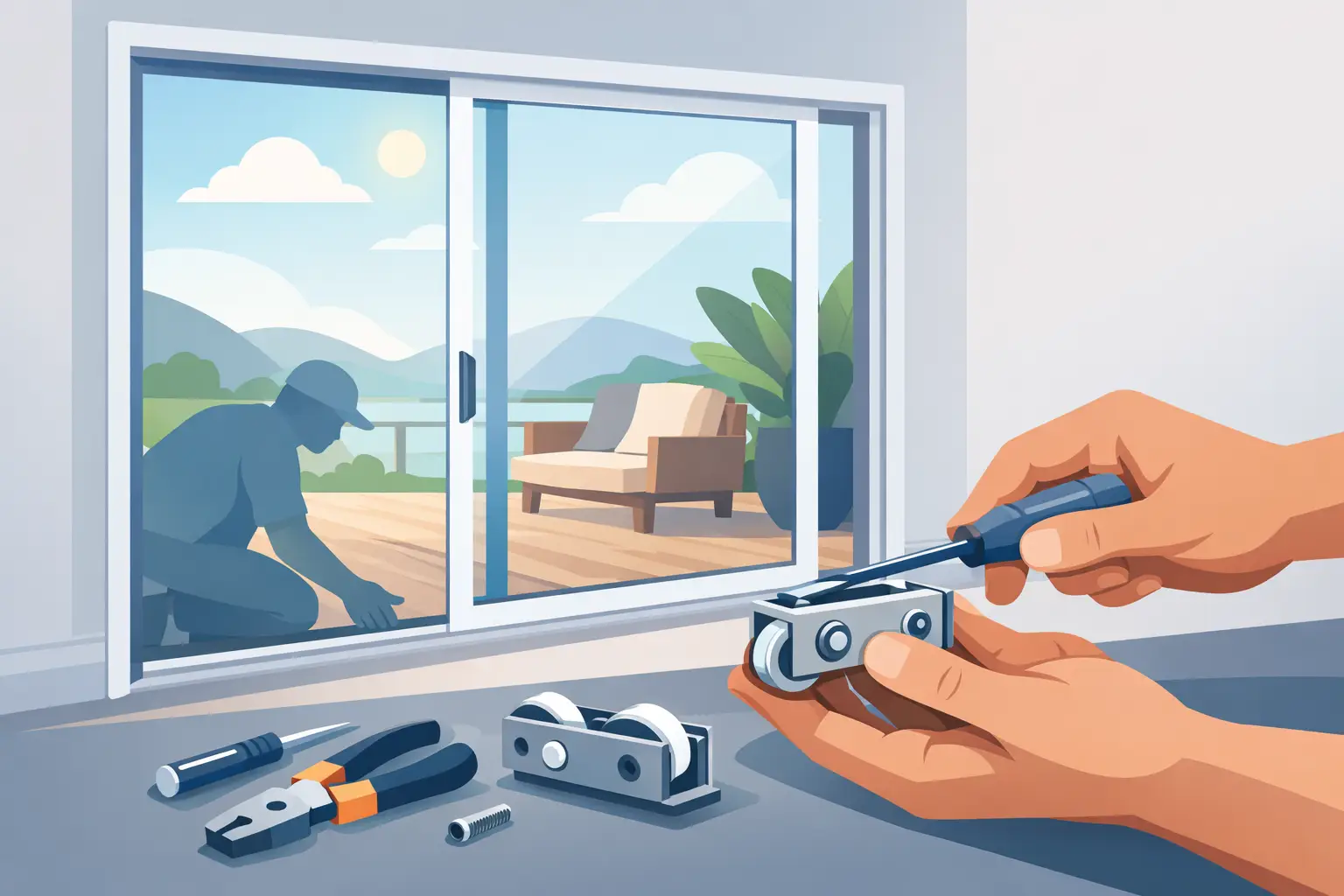
A proper roller replacement begins with identifying the door type and the correct roller assembly. Patio door rollers are not one-size-fits-all. Older aluminum doors, vinyl sliding doors, and newer high-performance systems may use different roller sizes, adjustment mechanisms, wheel materials, and mounting configurations.
The moving door panel is typically removed from the opening so the old roller assemblies can be accessed at the bottom edge. Depending on the door, a technician may need to loosen adjustment screws, remove trim, or carefully lift the panel from the track. Glass doors are heavy and awkward to handle, which is why this step is often best left to an experienced professional.
Once the panel is out, the roller housings are inspected for corrosion and wear. The replacement rollers must match the original assembly closely enough to support the panel correctly and allow for proper height adjustment. Installing an almost-right part can leave the door dragging, rolling unevenly, or difficult to lock.
The track also needs attention. Cleaning away dirt is helpful, but it will not correct a track that is deeply gouged, bent, or worn flat. In some cases, a track cap or repair component may be a practical solution. In others, damage to the door system is extensive enough that replacement offers better long-term value.
After new rollers are installed, the door is returned to the opening and adjusted for smooth movement, even spacing, and reliable locking. This final adjustment is where precise workmanship makes a difference. A door can appear to slide better at first but still wear prematurely if its weight is not distributed correctly.
Cleaning Helps, but It Cannot Fix Worn Parts
It is reasonable to clean a patio door track before assuming the rollers have failed. Vacuum out loose debris, then wipe the track with a mild cleaner and dry it thoroughly. Avoid packing the track with thick grease or oil. Those products tend to collect sand and dust, creating a gritty surface that can make the problem worse.
A dry, silicone-based lubricant may be appropriate for certain door systems, but lubrication is not a cure for damaged wheels, seized bearings, or a distorted track. If the door still drags after cleaning, needs to be lifted to move, or produces metal-on-metal noise, a closer inspection is warranted.
There is also a practical limit to do-it-yourself adjustment. Most sliding doors have adjustment screws near the bottom of the panel that raise or lower the rollers. A small adjustment can help when the door has settled slightly. Repeatedly turning those screws to force a worn door into position, however, can mask the underlying problem and place extra strain on the remaining hardware.
Repair or Replace the Entire Patio Door?
Roller replacement is usually a cost-effective repair when the glass is intact, the frame is in good condition, and the door meets your needs for insulation and appearance. Quality replacement rollers can restore years of dependable use, particularly when the track is cleaned and the door is aligned correctly at the same time.
Full door replacement may make more sense when the frame is badly corroded, the track is severely damaged, the insulated glass has failed, or the door has ongoing air and water leakage. It can also be a worthwhile upgrade for homeowners replacing an outdated door during a remodel or seeking improved energy efficiency and security.
The decision depends on the condition of the entire assembly, not just whether the door slides. A door with fogged glass, poor locks, worn weatherstripping, and a damaged track may need repeated repairs. A newer door with sound glass and a clean frame may only need rollers and adjustment.
For rental properties and commercial spaces, timely repair is often the best way to prevent disruption and protect the opening from additional damage. A patio door that tenants or customers struggle to use can quickly become both a maintenance concern and a safety concern.
Why Coastal Conditions Matter
Santa Barbara County homes experience conditions that are hard on exterior door hardware. Coastal moisture can accelerate corrosion, while fine sand settles into tracks and acts like abrasive grit under a heavy glass panel. Doors exposed to direct sun may also expand and contract over the years, contributing to fit and alignment issues.
Regular maintenance can slow that wear. Keep tracks clear, inspect weatherstripping periodically, and pay attention when a door begins to feel different. Waiting until it will not open at all often means more strain on the rollers, track, and frame.
If your door is close to the ocean, choosing durable replacement hardware is particularly important. Premium materials and correctly matched parts are not minor details. They help the door hold up to daily use and local weather conditions without sacrificing smooth operation.
When to Call a Professional
A professional assessment is a smart choice when the door is heavy, off track, difficult to lock, or showing signs of frame or glass damage. It is also the safer option for oversized panels, older doors with hard-to-find parts, and doors on upper-level balconies where handling the panel is more complicated.
An experienced glass and door technician can determine whether the issue is limited to the rollers or involves the track, locking system, weather seal, or frame. That clarity helps prevent spending money on a repair that does not address the real cause of the problem.
Resilience Glass provides trusted local service for sliding glass door repairs and replacements throughout Santa Barbara and nearby coastal communities. With a careful inspection and quality installation, the goal is straightforward: a patio door that slides smoothly, closes securely, and looks right in your home or business.
A door should not become one more daily frustration. If yours is dragging, sticking, or refusing to lock properly, taking care of it now can preserve the hardware you still have and restore the easy use your space was designed for.