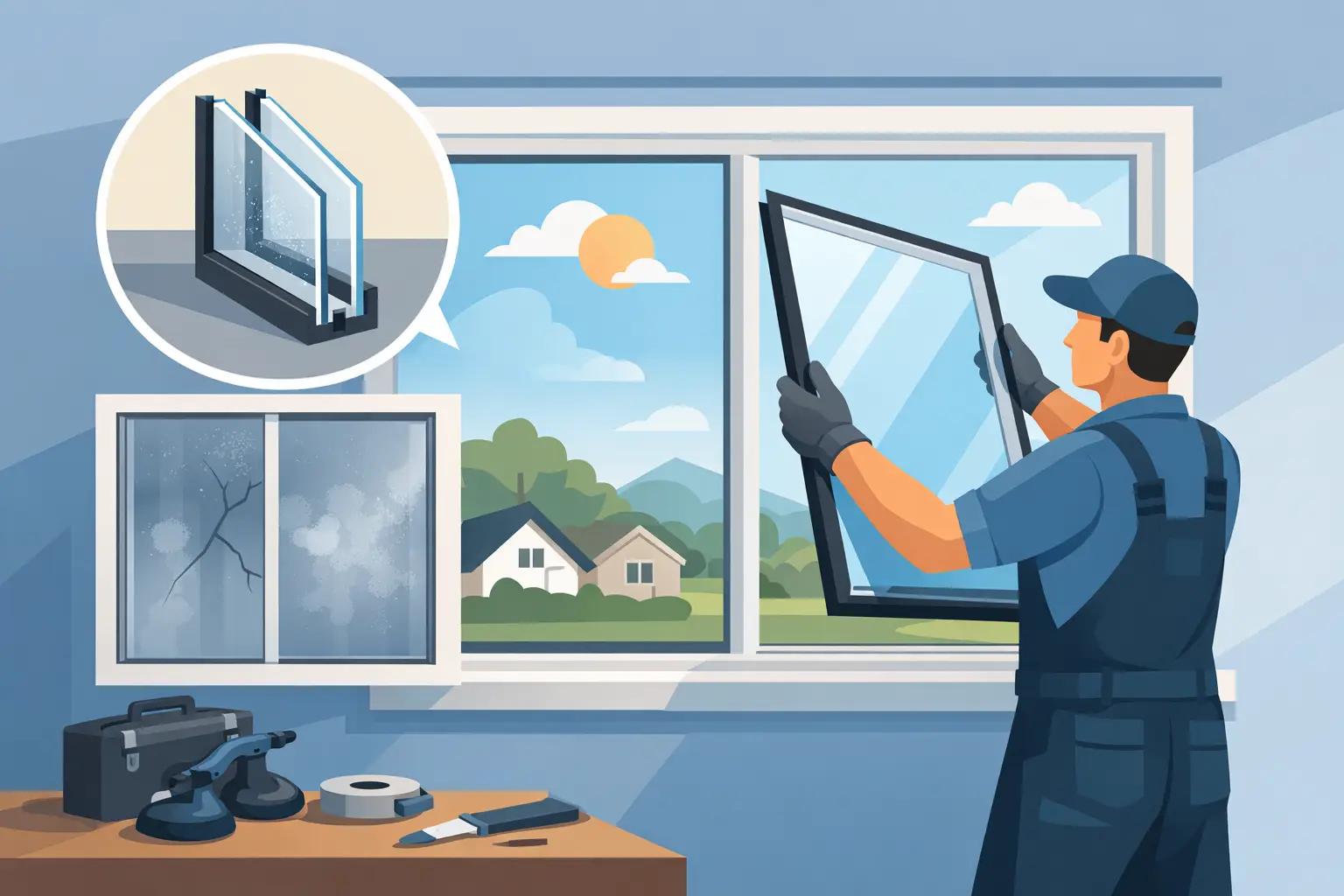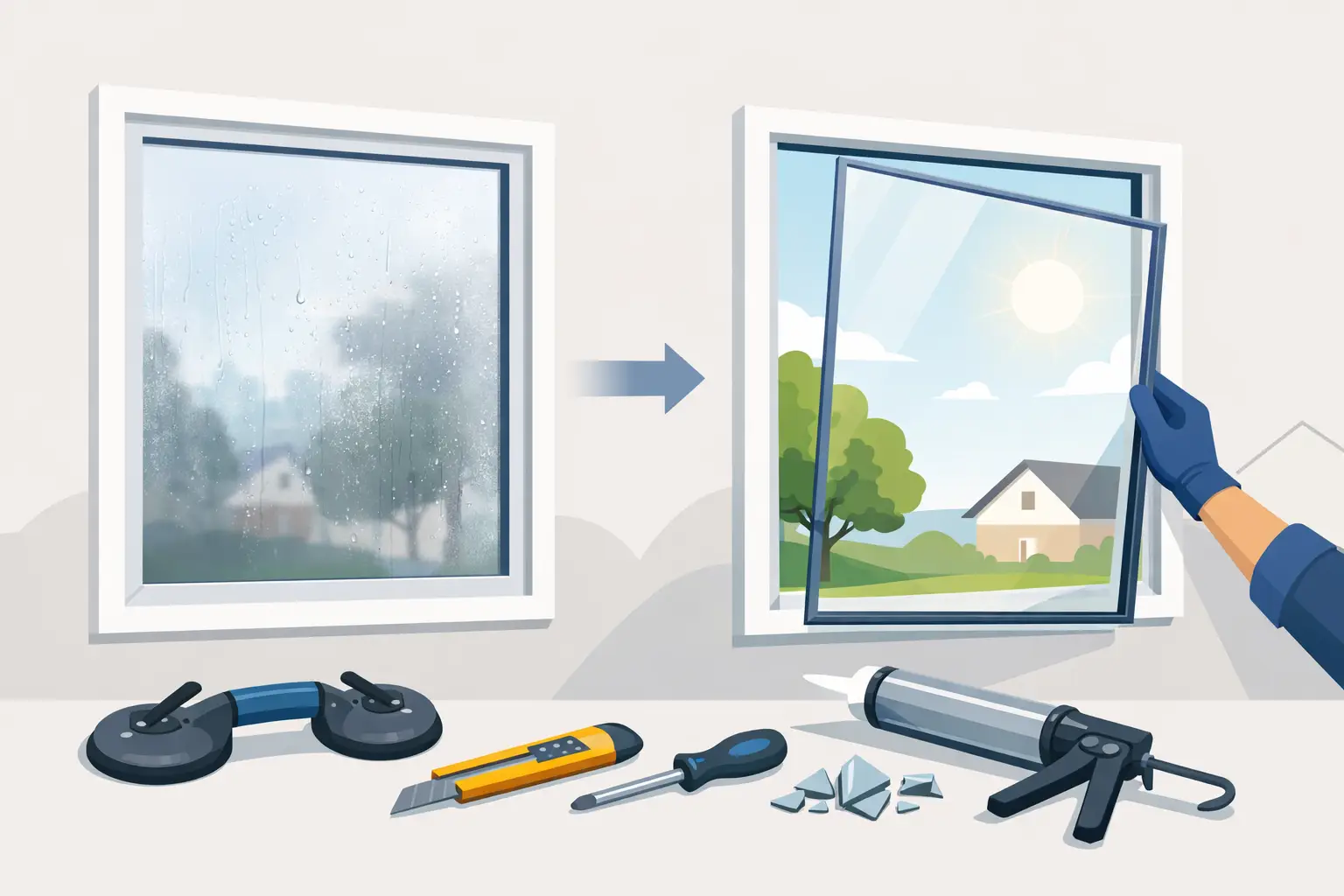

You notice it first in the morning light. The window looks cloudy. Moisture appears between the panes, and cleaning the inside or outside glass gives you the same result.
That often points to double pane window seal failure and signals the value of having the glass and window assembly evaluated.
For homeowners and property managers along the Santa Barbara South Coast, failed window seals can affect comfort, clarity, efficiency, and the overall appearance of the property. The right next step depends on the condition of the glass, the frame, and how the window is performing as a whole.
When a double pane window is working properly, the sealed space between the two pieces of glass helps insulate your home or commercial property. That sealed unit is designed to keep outside air and moisture out while improving indoor temperature control. Once the seal breaks down, the window starts losing some of the performance you paid for.
What double pane window seal failure actually means
A double pane window has two pieces of glass separated by a spacer and sealed around the edges. The airspace between those panes is part of what helps the window resist heat transfer. In many modern units, that space may also contain insulating gas to improve efficiency.
Seal failure happens when the perimeter seal weakens or breaks. Once that barrier is compromised, moisture can enter and the insulating value of the unit drops. In practical terms, the window may still stay in place and remain closed, but it no longer performs the way it should.
This is why people are often confused at first. The glass is not shattered. The frame may still look fine. Yet the window is clearly not right. Fogging between panes is the most familiar sign, but it is not the only one.
Common signs of double pane window seal failure
The clearest sign is condensation or haze between the panes. When moisture sits inside the insulated glass unit, the cloudiness stays trapped between the glass surfaces.
Some windows look milky throughout the day. Others look clear in dry weather and fog up when temperatures shift. Coastal conditions can make that pattern more noticeable, especially in homes exposed to sun, salt air, and changing moisture levels.
You may also feel drafts near the window. Some rooms may feel warmer in the afternoon and cooler at night. Higher energy bills can follow when several aging windows begin losing efficiency.
In some cases, the window develops mineral staining or a dirty appearance inside the panes. The surface you want to clean sits inside the glass unit, which makes regular cleaning unable to solve the issue.
When the glass looks cloudy from inside the unit, the issue is usually inside the insulated glass assembly.
Why window seals fail
Age is one of the biggest reasons. Even well-made insulated glass units have a service life. Over time, daily temperature changes place stress on the seal system.
Sun exposure can speed up that process, especially on windows that receive long hours of direct light. Along the coast, moisture, salt air, and wind can add more stress to exterior materials.
Installation quality also matters. When a window sits out of square, or the frame shifts over time, the insulated glass unit can experience added pressure. Precise installation helps the window seal perform better for longer.
Is a failed seal just cosmetic?
A foggy window can affect appearance, comfort, efficiency, and long-term confidence in the window system.
Sometimes homeowners are told to treat it like an appearance issue only. That is not always wrong, but it is not the full picture either.
If the window is only mildly hazy and the rest of the unit is still functioning, the immediate concern may be visual. But over time, double pane window seal failure can reduce insulation performance and make indoor spaces less comfortable. In rooms with a lot of direct sun, that difference can become more noticeable.
For homes and businesses trying to maintain energy efficiency, a failed seal is more than a cosmetic annoyance. It means the insulated glass unit is no longer doing its job as effectively. The impact may be modest with one window and more meaningful when several windows have the same issue.
Repair or Replacement: What Makes Sense?
This is where the right answer depends on the condition of the full window, not just the fogged glass.
If the frame is in good shape and the issue is limited to the insulated glass unit, replacing the glass may be the most practical solution. That allows you to restore clarity and improve performance without replacing the entire window assembly. For many property owners, this is the balance of value and results they are looking for.
If the frame is damaged, outdated, difficult to operate, or already underperforming, full window replacement may make more sense. That is especially true if you are dealing with multiple old windows, rising energy costs, or plans to upgrade the appearance of the property.
Vinyl window replacement is often a strong option in coastal communities because it offers durability, low maintenance, and solid energy performance. For older homes and commercial properties, upgrading beyond the failed glass can solve several issues at once.
What usually does not work well is waiting too long in the hope that the problem will reverse itself. Once the seal has failed, the unit does not reseal on its own.
Can a failed window seal be fixed without replacing the glass?
Some temporary methods may reduce visible fogging for a short time, though the strongest path is restoring the window’s actual performance. In many cases, the practical solution is replacing the affected glass unit or evaluating whether the full window has reached the end of its service life.
That is why a professional evaluation matters. You want to know whether the real solution is insulated glass replacement, full window replacement, or a broader upgrade plan if several units are nearing the end of their service life.
A trustworthy local glass specialist should explain the trade-offs clearly. The goal is not to oversell a full replacement when glass-only replacement will do the job. It is also not to patch over a larger problem if the frame and hardware are already failing.
Why South Coast Conditions Matter
Homes in Santa Barbara, Montecito, Goleta, Carpinteria, and nearby coastal communities deal with a mix of bright sun, marine air, moisture, and changing temperatures. Those conditions are part of what makes this region beautiful, but they can be demanding on glass and window systems.
That is one reason local experience matters. A contractor familiar with coastal properties can look beyond the fogged glass and assess how the frame, exposure, and installation history may be affecting performance. They can also recommend premium materials better suited to the environment and your goals, whether that is energy savings, curb appeal, or a more durable long-term upgrade.
For property managers, speed matters too. A cloudy or compromised window can affect tenant satisfaction and the appearance of the building. For homeowners, the concern is often a mix of comfort, aesthetics, and not wanting a small problem to turn into a bigger project later.
When to schedule an inspection
If you notice moisture between panes, persistent haze, drafts, or changes in window performance, a professional inspection can help clarify the best next step.
Resilience Glass helps homeowners understand whether the issue involves the glass, the frame, or the full window system. Clear glass, stronger insulation, and a properly sealed unit can make the room feel cleaner, more comfortable, and better cared for.