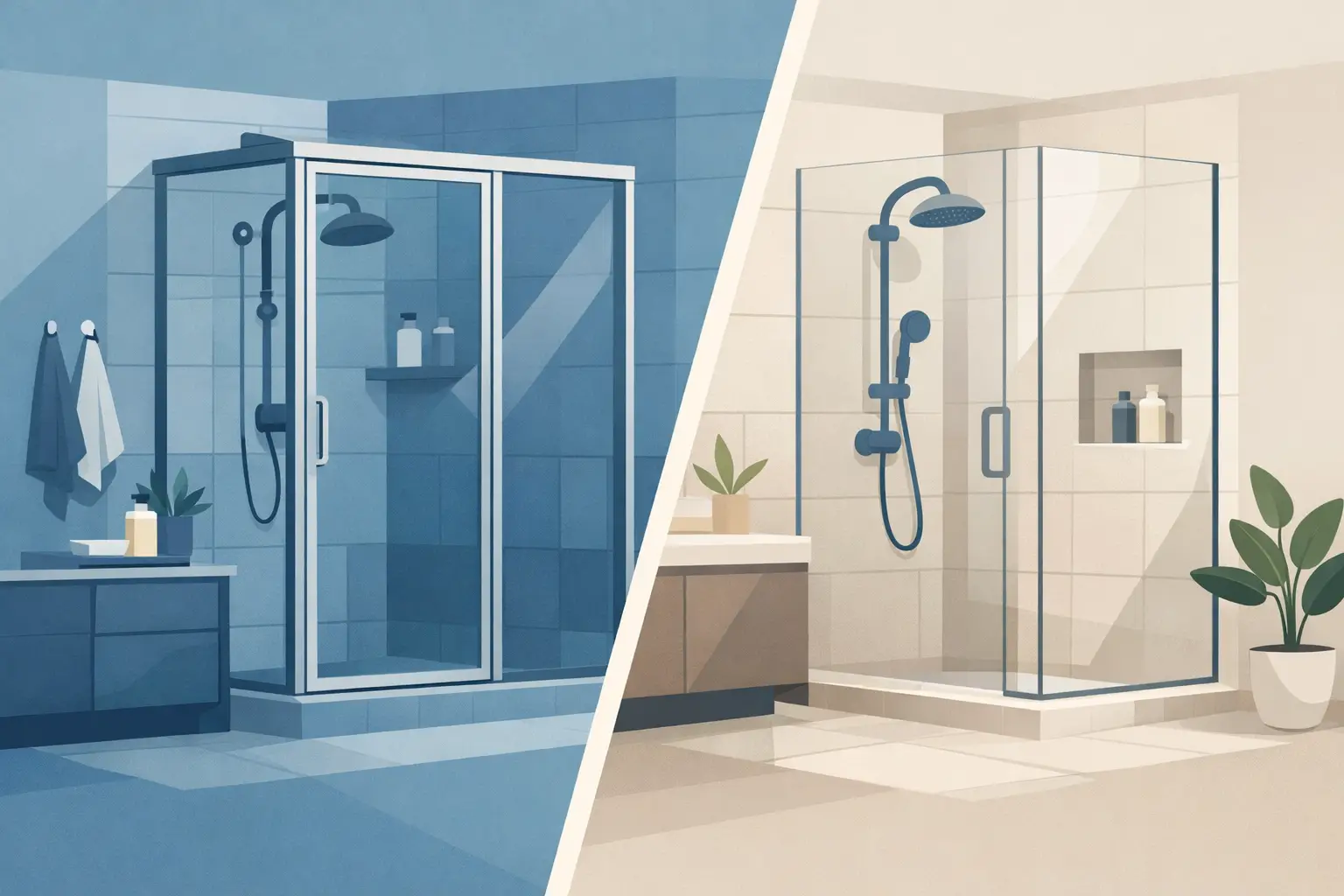
A shower door can change the whole feel of a bathroom faster than almost any other upgrade. When homeowners compare framed vs frameless shower doors, they are usually deciding between two very different priorities – a more budget-friendly, practical enclosure or a cleaner, more custom look that can make the room feel larger.
The right choice depends on your bathroom, your budget, and how long you want the installation to perform with minimal trouble. In coastal communities like Santa Barbara, Montecito, Goleta, and Ventura, that decision also needs to account for moisture, daily use, and the value of quality materials that hold up well over time.
Framed vs Frameless Shower Doors: The Core Difference
A framed shower door uses metal around the edges of the glass for structure and support. The frame helps stabilize thinner glass and creates a more traditional finished look. These doors are common in older bathrooms and in remodels where keeping costs under control matters.
A frameless shower door uses thicker tempered glass and minimal metal hardware. Instead of relying on a full frame, it is supported by hinges, clips, and carefully measured installation points. The result is a more open appearance with less visual interruption.
That design difference affects more than style. It changes the price, cleaning routine, installation precision, and even how spacious the bathroom feels.
When Framed Shower Doors Make More Sense
Framed shower doors still have a place, and for many homes they are the practical choice. If you are updating a guest bath, a rental property, or a bathroom where function matters more than a high-end design statement, framed doors can be a smart investment.
Because the metal frame provides support, the glass itself is usually thinner than what is used in frameless systems. That often lowers the overall project cost. Framed doors also tend to have a tighter seal, which can help reduce water escaping the enclosure. In homes with energetic kids or in bathrooms used heavily every day, that extra containment can be appealing.
There is also some flexibility in installation. If the walls are not perfectly square, a framed system can sometimes accommodate slight irregularities more easily than a frameless one. That does not mean installation should be casual. It still needs precise measurement and proper leveling to avoid leaks, sticking doors, or premature wear.
The trade-off is appearance and maintenance. Frames create more edges, channels, and corners where soap scum and mineral buildup can collect. Over time, metal finishes and seals may show wear more quickly, especially in a humid bathroom.
Why Homeowners Often Prefer Frameless Shower Doors
Frameless shower doors are popular for a reason. They make a bathroom look more open, brighter, and more updated without changing the room’s layout. In smaller bathrooms, that visual openness can make a noticeable difference.
Because there is less metal, the eye moves through the glass instead of stopping at a frame. Tile work stands out more. Natural light travels farther. If you have invested in a nice shower surround, custom tile, or upgraded fixtures, a frameless door lets those details stay visible.
Frameless doors are also easier to keep looking polished in many cases. With fewer metal edges and tracks, there are simply fewer places for grime to hide. Glass still needs regular cleaning, especially in areas with hard water, but the enclosure often feels easier to maintain day to day.
The catch is that frameless systems require more exact installation and usually cost more upfront. The glass is thicker and heavier, and the hardware has to be carefully selected and installed to support it properly. This is one area where craftsmanship matters a great deal. A poorly installed frameless door may not swing correctly, may leak at problem spots, or may place stress on the glass and hardware.
Cost Matters, but So Does Long-Term Value
For many property owners, cost is the first question. Framed doors usually cost less to purchase and install, which makes them appealing for practical remodels and properties where staying on budget is the priority.
Frameless shower doors are typically the higher investment. The thicker glass, specialized hardware, and more precise installation all add to the project price. But the value is not just aesthetic. A well-built frameless enclosure can improve the overall impression of the bathroom and give the space a more custom, finished look.
If you are remodeling a primary bathroom or preparing a home for long-term enjoyment, frameless may feel worth the premium. If you are upgrading a hall bath or making improvements to a rental unit, framed may deliver the right balance of durability and cost control.
This is one of those choices where cheapest and best are not always the same thing. The better question is which option fits the room’s role and your goals for the property.
Maintenance and Cleaning in Real Life
Homeowners often assume frameless always means lower maintenance. That is only partly true. Frameless enclosures usually have fewer crevices, which helps, but the larger exposed glass panels will still show water spots if they are not wiped down regularly.
Framed doors can hide some spotting better, yet the tracks and frame edges often collect residue that takes more effort to clean thoroughly. If the enclosure has a bottom track, that area can become a common trouble spot.
In coastal California homes, salt air and moisture can also influence hardware longevity. Choosing premium materials and finishes matters whether you go framed or frameless. Better hardware, proper seals, and professional installation all contribute to how well the enclosure performs after years of use.
Which Style Fits Your Bathroom Better?
Bathroom size and layout should guide the decision. Frameless doors tend to work especially well in modern remodels, primary suites, and bathrooms where you want an open, upscale feel. They pair well with custom tile, lighter color palettes, and contemporary fixtures.
Framed doors can still look attractive, especially when selected with a clean finish that complements the room. They often make sense in traditional bathrooms, secondary baths, and projects where practical performance matters more than a minimalist look.
There is also the matter of the shower design itself. Some spaces are ideal for a fixed glass panel with a frameless door, while others may function better with a framed sliding option. A tight bathroom with limited swing clearance may narrow the choices quickly.
That is why measurements and on-site evaluation are so important. What looks best online does not always suit the actual room.
Framed vs Frameless Shower Doors for Resale and Remodeling
If resale value is part of your thinking, frameless doors often create stronger visual appeal. Buyers tend to notice bathrooms, and a clear, modern shower enclosure can make the room feel newer and more refined.
Still, resale is rarely about one feature alone. A framed enclosure that is well-made, clean, and properly fitted will always outperform a frameless door that looks impressive at first but is installed poorly. Quality workmanship matters more than trend-chasing.
For remodeling projects, it helps to think about the bathroom as a whole. If you are replacing tile, updating fixtures, and aiming for a more custom finish, frameless usually aligns better with that investment. If the remodel is more modest and focused on function, framed may be the more sensible match.
Why Installation Quality Matters So Much
Shower glass is not a place for rough measurements or shortcuts. The difference between a door that closes smoothly and one that drags, leaks, or shifts over time often comes down to installation precision.
Frameless systems especially depend on exact measurements, stable mounting surfaces, and hardware that is matched to the glass weight and configuration. Framed doors have a bit more built-in structure, but they still need careful alignment and proper sealing.
That is why many local homeowners prefer working with a glass specialist rather than treating the shower enclosure as an afterthought in a larger remodel. A properly installed shower door should feel solid, look clean, and perform reliably every day.
At Resilience Glass, that kind of detail matters because the goal is not just to finish the job – it is to install something that continues to look and work the way it should.
So, Which One Is Right for You?
If you want lower upfront cost, strong water containment, and a dependable option for a secondary bathroom or rental property, framed doors often make sense. If you want a more open, upgraded look and are willing to invest in thicker glass and custom installation, frameless doors are often the better fit.
Neither option is automatically better in every bathroom. The right answer depends on the layout, the condition of the walls, the design goals, and how you use the space every day.
A good shower enclosure should do more than separate wet and dry areas. It should fit the room, hold up to daily use, and make the bathroom feel finished every time you walk in.